

Course
Reimagining Nature Online Cursus (EN)
Learn about creative and artistic methods for a renewed perspective on humans and nature
Course overview
Welcome to the online course Reimagining Nature! This course is specially designed for educators interested in exploring diverse artistic and creative methods to rethink nature and humanity’s role within it in innovative ways. Reimagining Nature offers a stimulating journey to broaden your perspectives on ecological sustainability and integrate cutting-edge methods into your teaching.
Dive into the world of the imagination
Throughout this course, artists, designers, and researchers share new perspectives and methods for examining our changing relationships with nature. You will delve into digital and speculative imagination techniques, enabling you and your students to speculate about future sea-level rise or tell stories from the perspectives of animals and plants living in human-made environments. We explore how the loss of natural phenomena—such as glaciers—can be made tangible, and we explore changes in our living environments through audio collages that bring together past, present, and future.
Applicable in your teaching practice and beyond
The course is tailored for higher education instructors who are passionate about ecological sustainability and want to integrate these themes creatively into their lessons. As an educator, you can apply the course methods in your own teaching and engage your students in the essential question: “What does a sustainable future look like?”
However, the methods from this course can also be applied outside the classroom. For example, municipalities aiming to align their spatial planning and transition challenges more closely with the needs and experiences of non-human inhabitants, or designers and businesses seeking to make the principles of more-than-human design tangible. This course is also for anyone interested in ecological sustainability and ways to explore these themes through creative approaches.
What to expect
In the course modules, artists, designers, and researchers will introduce you to the world of creative and artistic methods for exploring our relationship with nature on a deeper level. After completing these learning activities, you—as an educator—will select one (or more) of these creative methods and apply it in your own teaching practice, together with your students. This course offers not only theoretical knowledge but also the opportunity to put the methods into practice and experience how they can enrich your teaching.
The course consists of an introductory video, an in-depth module on dominant and underrepresented currents in the history of thinking about the relationship between humans and nature, and three clusters filled with creative methods to apply in your teaching. In these three clusters, you will sequentially explore the following themes:
- The world from nature’s perspective (focusing on empathizing with the lived experiences of non-human species);
- A new perspective on nature (questioning and, if necessary, revising past taboos and assumptions);
- Reflections on a changing landscape (visualizing or making tangible a future shaped by climate change).
Structure and content
- We recommend starting with the introduction page and completing the first cluster. After that, you are free to follow the course linearly or navigate through the modules based on what inspires you. Choose the methods that resonate with you or align directly with the themes you cover in your lessons. Everything is immediately accessible: you can revisit all videos, resources, and assignments at any time and use them in your own teaching.
Learning objectives
After completing this online course, you will:
- Have developed a broader understanding of how definitions and perceptions of nature are strongly dependent on context and culture;
- Have gained insight into how creative and artistic approaches can help explore these themes and understand the diverse perspectives on the relationship between humans and nature;
- Have learned how to effectively apply various artistic and creative methods in your own teaching practices to spark conversations about ecological sustainability;
- Be able to actively participate in knowledge exchange with other educators on the course’s themes.
Who is this online course for?
- Educators interested in ecological sustainability and creative methods for their teaching practice;
- Teacher-researchers from the CoECI network: AHK, HvA, Inholland, and the Gerrit Rietveld Academie;
- Anyone interested in ecological sustainability.
Meet the guest instructors
Loes Bogers is interested in practices at the intersection of art, design, and technology that engage with urgent societal issues. For many years, she worked as a lecturer-researcher at various (art) academies and was involved with the collective Hackers & Designers as a maker and organizer from 2017 to 2025. Since 2026, Loes has been working as a subsidy specialist Digital Culture at the Stimuleringsfonds Creatieve Industrie.
Collectief Walden is a group of artists and thinkers who feel the urgency of the ecological crisis. We are a philosopher, a dramaturg, and a scenographer—but the philosopher is also a graphic designer, the dramaturg a political theorist, and the scenographer a mime. We all perform: sometimes as lecture-performers, sometimes as operators of large-scale transformations in the landscape, sometimes as musicians. Radio makers, musicians, performers, writers, and biologists move in the first and second circles of our collective. We never embody fictional characters, because we do not create fiction. Instead, we make installations, performances, and meeting spaces at the intersection of science, documentary, and visual art. Our approach is interdisciplinary: images, poetry, lecture performances, and music converge in collage-like performances and dynamic installations. Our works often unfold in landscapes or public spaces.
Ruth Catlow is a UK-based artist, researcher, curator, and co-founder/director of Furtherfield, an Arts Council NPO. She specialises in playful, collaborative projects that explore art, technology, and eco-social change. Furtherfield, now in East Anglia, UK, supports communities to creatively challenge inequalities and build more democratic, equitable cultural and environmental futures, embracing more-than-human perspectives and critical group-driven discovery.
Cream on Chrome is a Rotterdam-based experience design studio founded by Jonas Althaus (DE) and Martina Huynh (CH). With their award-winning multimedia installations, they seek to involve people into the pressing questions of our times. Putting the focus of their work on interaction, they manage to make new perspectives in economy, news media, and techno-ecologies feel light-hearted and intuitive to explore. Cream on Chrome works with academic and cultural institutions and regularly presents their work internationally.
Anne Dessing is a Dutch architect. Her practice, Studio Anne Dessing, operates at the intersection of art and architecture. She explores architecture through exhibitions, installations, drawings, models, interiors, and (temporary) buildings, using the discipline’s powerful representational techniques as tools to understand societies as complex aesthetic systems.
Sam Edens is the coordinator of the Biomaterials Studio, a community lab at the Amsterdam University of Applied Sciences (HvA) where students, educators, and researchers work with biobased and living materials and experiment with biodesign techniques. Sam coordinates the minors Makers Lab: Making as Research and Sustainable Futures: Nature + Design + Creativity, both centered on biodesign.
Carlo De Gaetano is a designer and researcher at the Visual Methodologies Collective, specializing in data visualization for social research. He develops methods to collect and explore audiovisual collections with nature themes from archives and online spaces, using AI and participatory practices. He collaborates as an information designer with the Digital Methods Initiative (UvA), contributing to research on the imagination of climate futures, climate movements, and disinformation. Carlo also designs educational materials for programs within and beyond the HvA, focusing on the use of data visualization, computer vision software, and image collections to study societal issues.
Let Death Dance Again (LDDA) is an Amsterdam-based research and design studio founded by Stefan Schäfer, exploring the power of death, memorials, and rituals of remembrance in relation to environmental destruction. LDDA examines contemporary values through the allegorical concept of the dance of death and its integration into daily life and contemporary aesthetics. All projects manifest in various media, aligned with the themes D.E.A.D. (Death. Environment. Anthropocene. Design), and have been exhibited internationally. In May 2023, he began his Professional Doctorate (PD) at DAS Research, part of the Academy of Theatre and Dance, with the title “Breaking Apart Together: Performing speculative design with dying mountains and glaciers.”
Agat Sharma is an artist, educator and theatre maker. Agat is currently engaged in a long term research about the history of cotton conducting theatrical experiments exploring cotton’s pre-colonial legacy, colonial extractivism and the ongoing agrarian crisis in India. His work prominently features themes examining the emergence, evolution and erasure of the relationship between land and the body. He works with an expanded notion of what a song and a story can be and employs them as tools for evoking post-colonial imaginaries. Agat works between the Netherlands and India. In the past his work has been associated with The Sarai Programme, Khoj Artist Association, Jawahar Kala Kendra, and Jan Natya Manch.
Justus Sturkenboom is co-coordinator and lecturer in the Ad Frontend Design & Development program and the minor Denkerslab: Filosofie in Actie at the Amsterdam University of Applied Sciences.
Elise Talgorn is a multidisciplinary researcher and artist who explores how stories can spark compassionate connections between people, nature, and technology. She is Associate Professor in Impact Storytelling at the Amsterdam University of Applied Sciences, where she researches how participatory story-based experiences drive systemic change. As an artist, she creates paintings and comics that give voice to the more-than-human with humor and emotion.
Katía Truien is a media researcher, curator, and musician. Her work focuses on bringing people together around practices of listening, archiving, and enacting alternative urban, technological, and ecological futures. She is part of Loom—a practice for cultural transformation—and teaches at the Studio for Immediate Spaces at the Sandberg Instituut, while curating the context program at Rewire Festival.
Meet the editors
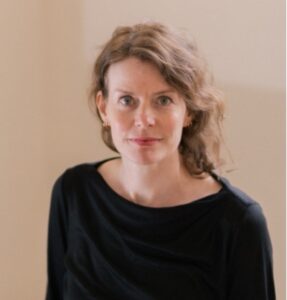
Sabine Niederer
Sabine Niederer, PhD, is professor of Visual Methodologies at the Amsterdam University of Applied Sciences, where she founded the Visual Methodologies Collective, a research and design collective focused on developing visual, digital, and participatory methods for social and cultural inquiry. In her projects, Sabine brings together artists, designers, researchers, and students from diverse disciplines to study urgent social and cultural issues, with a particular emphasis on ecological and social sustainability.
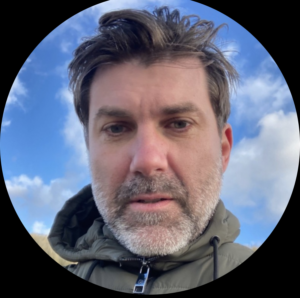
Nick Verouden
Nick Verouden, PhD, is hoofddocent onderzoek at Creative Media for Social Change at the Amsterdam University of Applied Sciences. He focuses on developing and applying creative research methods to explore and strengthen new connections and collaborations. His work places particular emphasis on the use of film and video techniques in participatory projects related to climate and sustainability. In 2016, he completed his PhD from TU Delft, exploring complex collaborative processes and the role of conversations and silences within them.
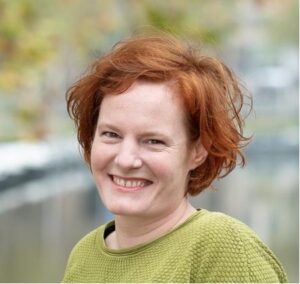
Inte Gloerich
Inte Gloerich, PhD, is a researcher at the Visual Methodologies Collective at the Amsterdam University of Applied Sciences. In her work, Inte critically and creatively explores the intersections of emerging technologies, culture, and power. Her work bridges theoretical inquiry with participatory and creative methods to explore technology through decolonial, feminist, and ecological lenses. She has a PhD in Media Studies from Utrecht University in which she focussed on blockchain imaginaries of truth. Currently, she is a postdoctoral researcher in the Slow AI project, which aims to foster a critical, ethical, and sustainable relationship with AI by reimagining how we engage with these technologies in our societies, helping us speculate alternative presents and futures with AI technologies.
Colofon
Initiators: Sabine Niederer (Visual Methodologies Collective) en Nick Verouden (Creative Media for Social Change)
Editors: Sabine Niederer, Nick Verouden, en Inte Gloerich
Editorial assistant: Madelein Pas
Visuals: Andy Dockett
Contributors: Loes Bogers, Collectief Walden, Ruth Catlow, Cream on Chrome, Anne Dessing, Sam Edens, Carlo De Gaetano, Stefan Schäfer, Agat Sharma, Justus Sturkenboom, Elise Talgorn, Katía Truijen
Video production: Joussef Jouda (Studio HvA | AV-Producties), with support from Daniel Laaper (Beeldlabs CO-CB) and Martijn Lenten
Technical support: Digital Society School
Made possible with the support of: Centre of Expertise Creative Innovation en Imagination in Transition (SIA SPRONG).


